
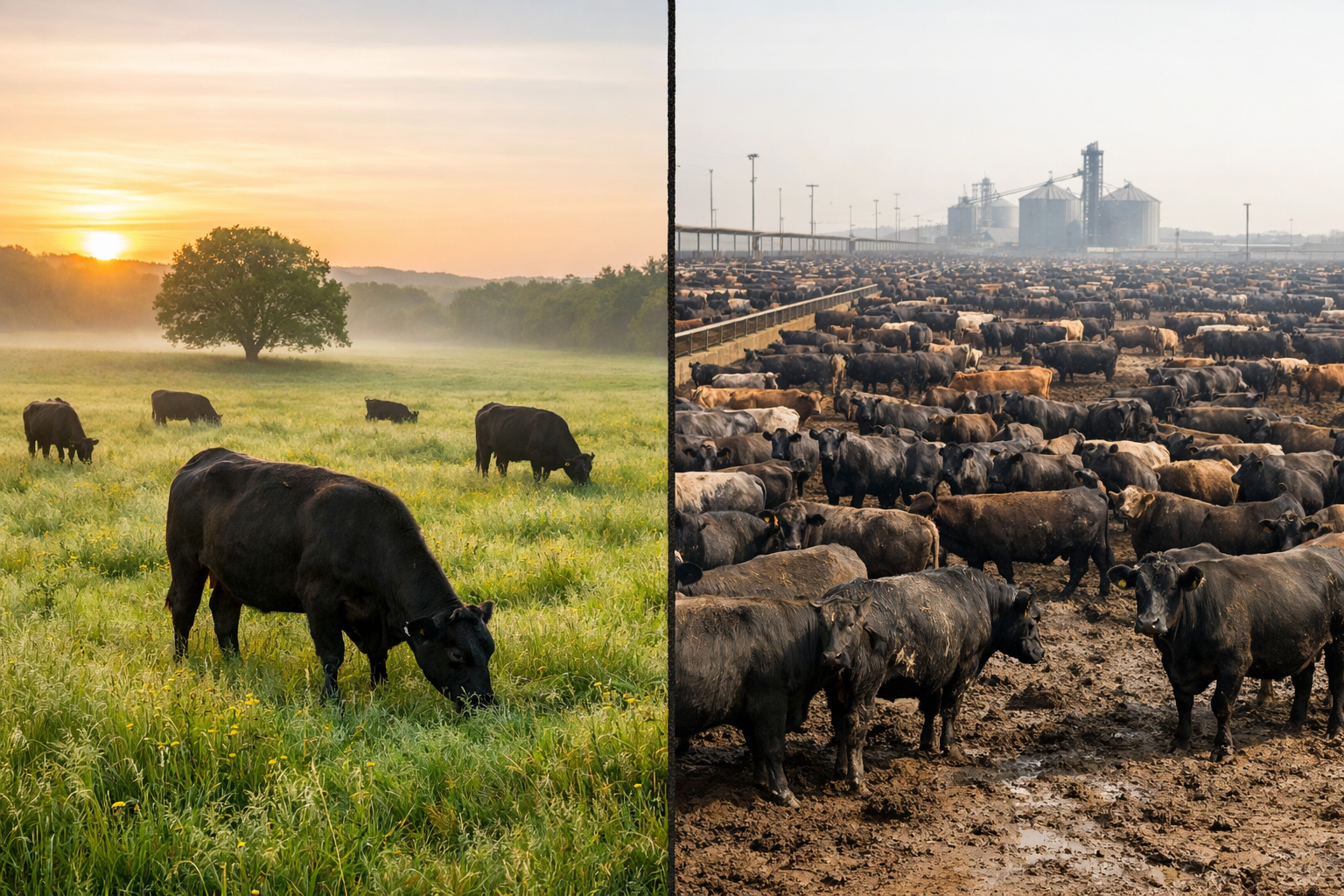
In the modern world, convenience is king. It’s incredibly easy to walk into a fluorescent-lit big box store, grab a plastic-wrapped tray of ground beef, and be home in twenty minutes. But as more people look to reconnect with their food sources—moving away from the “corporate” side of life and back to the land—the differences between that supermarket styrofoam and local, farm-raised meat become impossible to ignore.
When you buy meat from a local farm, you aren’t just buying dinner; you’re investing in a completely different ecosystem. Here is how local meat stacks up against the big box alternatives.
1. Transparency vs. The “Black Box”
When you buy from a big box store, that steak likely traveled thousands of miles. It may have been processed in a massive facility alongside meat from hundreds of different cattle, often from multiple different countries.
The Local Difference: On a local farm, there is no “black box.” You know exactly where the animal lived, what it ate, and how it was treated. There is a direct line of accountability between the farmer and your table. You can often visit the farm, see the pastures, and understand the husbandry practices firsthand.
2. Regenerative Health vs. Industrial Efficiency
Industrial meat production is designed for one thing: volume. This often requires the use of sub-therapeutic antibiotics to prevent disease in crowded conditions and hormones to speed up growth.
The Local Difference: Many local farms prioritize regenerative agriculture. This means the animals are moved frequently to fresh pasture, mimicking natural grazing patterns. This doesn’t just produce a cleaner product; it actually heals the soil.
- Nutritional Profile: Studies show that pasture-raised meat is often higher in Omega-3 fatty acids, Vitamin E, and Beta-carotene compared to grain-fed industrial meat.
- No “Hidden” Ingredients: You won’t find carbon monoxide (used to keep meat looking pink) or saline injections (used to add weight) in local cuts.
3. Flavor and Texture
If you’ve only ever eaten grocery store meat, you might be surprised by the intensity of flavor in farm-raised options. Because local animals typically grow at a slower, more natural pace and have access to a diverse diet of grasses and forage, the meat develops a more complex, “beefy” or “porky” profile.
“Industrial meat is bred for consistency; local meat is raised for character.”
4. Keeping Your Dollars in the Community
When you spend $20 at a global retail chain, only a tiny fraction of that money stays in your town. When you buy from a neighbor, that money stays in the local economy. It helps maintain open green spaces, supports local feed stores, and ensures that small-scale farming remains a viable way of life for the next generation.
Making the Switch
Transitioning to local meat often requires a slight shift in mindset. You might buy in “bulk” (like a quarter or half cow) to save money, or you might find that you eat slightly less meat because the quality is so much higher and more satiating.
Ultimately, choosing local is about more than just a meal. It’s about choosing a system that respects the animal, the land, and the health of your family.