
When people picture cattle farming, they usually imagine one of two things:
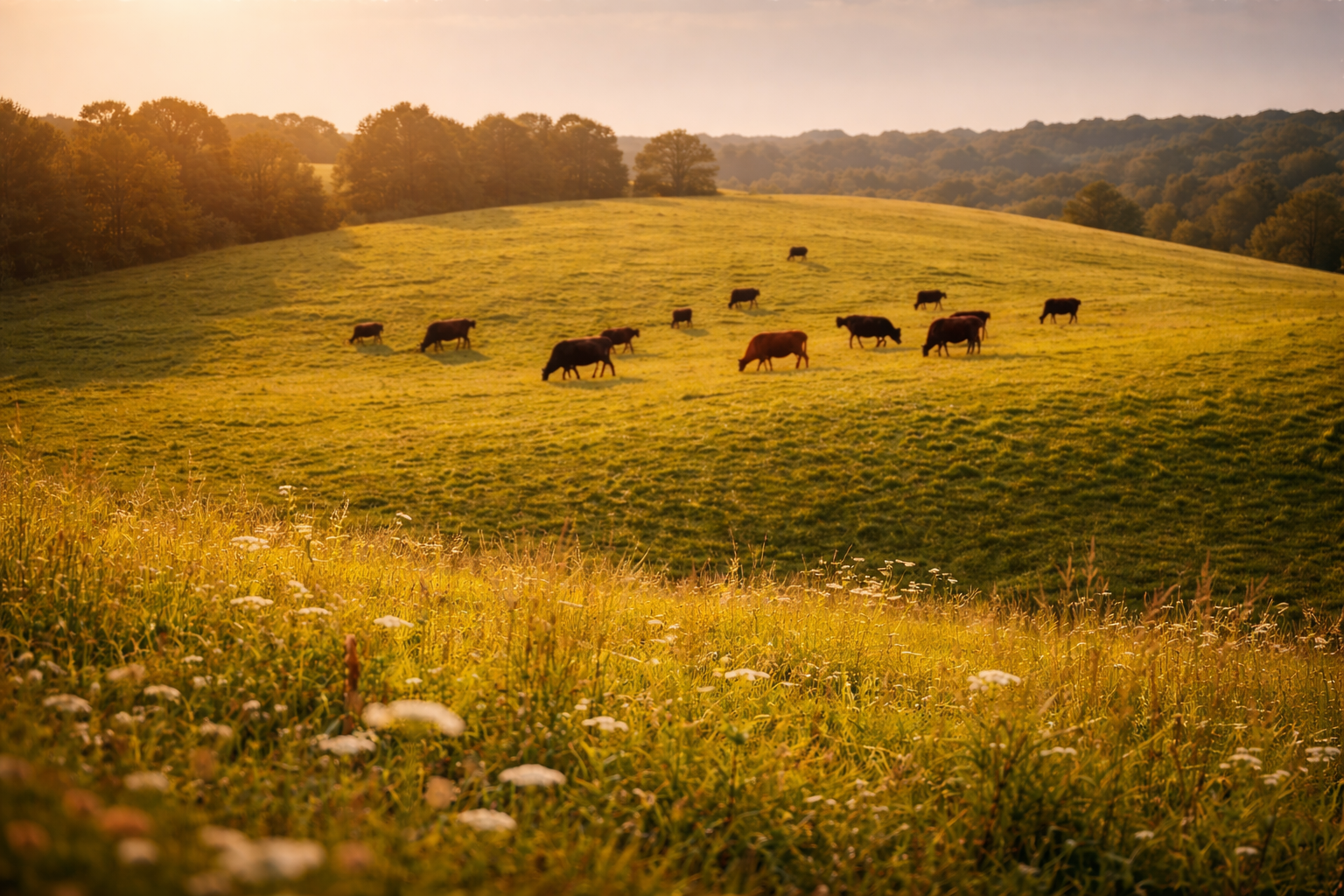
Rolling green pastures with cows peacefully grazing.
Or
Massive feedlots and industrial operations.
The truth for small farms sits somewhere in between.
Raising cattle well is less about the cow and more about the land beneath her feet.
Cattle Are Grass Harvesters
A cow’s job is simple.
She turns grass into protein.
But the quality of that protein depends entirely on:
- Soil health
- Forage diversity
- Grazing management
- Stress levels
Cows don’t create good beef. Good pasture does.
The Soil → Grass → Cow Connection
Everything starts in the soil.
In East Tennessee, we deal with mineral-rich red clay. That clay holds nutrients well, but without organic matter and biological life, pasture can become thin and compacted.
Healthy pasture requires:
- Deep-rooted grasses
- Legumes like clover
- Rotational grazing
- Rest periods
When cattle are moved properly and pasture is given time to recover, something interesting happens.
The land improves.
Manure feeds microbes. Hoof impact presses seed into soil. Root systems grow deeper.
The system becomes regenerative instead of extractive.
Why Rotation Matters
Continuous grazing weakens pasture.
Rotational grazing:
- Prevents overgrazing
- Encourages diverse forage
- Reduces parasite pressure
- Improves weight gain
When cattle are allowed to graze intensely for a short period and then moved, grasses recover stronger.
It mimics natural herd movement.
Stress Shows Up in the Meat
A calm animal produces better beef.
Low-stress handling reduces cortisol, which affects tenderness and flavor.
That means:
- Quiet movement
- Clean water
- Shade access
- Consistent nutrition
It’s not romantic. It’s practical.
Calm cattle gain better and finish better.
The Economics Most People Don’t See
Raising cattle on a small farm isn’t just about buying a calf and selling beef.
There are:
- Feed costs
- Mineral programs
- Fencing
- Equipment
- Processing
- Time
Small farms succeed when they manage:
- Land health
- Cost control
- Direct relationships with customers
The relationship piece is what industrial systems cannot replicate.
What Makes a Cow “Good”?
It’s not just breed.
It’s:
- Structural soundness
- Growth efficiency
- Temperament
- Adaptability to local climate
In East Tennessee humidity, resilience matters.
A cow that thrives in Kansas might struggle here.
Local adaptation is underrated.
The Bigger Picture
Cattle can degrade land.
Or they can restore it.
It depends entirely on management.
On a small farm, every decision shows up quickly in the pasture.
The goal isn’t just producing beef.
It’s improving soil, increasing biodiversity, and building something that lasts.